Up: survey-nonresponse Prev: week1-introduction-survey Next: week3-response-rates-and-nonresponse-bias
Reading Notes:
daikeler (2020) - web vs other survey modes
- web surveys have lower response rate compared with other modes (11%)
- pros of web-surveys:
- positive data quiality (increased level of reporting of sensitive info)
- time-sensitive aspects
- cheaper and faster
- cons of web-surveys:
- question skipping, speeding
- responsive inconsistency, satisficing
- representativeness issues
- representativeness issues is a big challenge:
- for populations with high internet coverage, nonresponse bias is low
- but in general population, internet users and non-users are not randomly distributed
-
Results
- comparing web surveys to other modes (mail and telephone), web surveys show significantly lower response rates
- survey design:
- simpler and shorter surveys reduce the response rate gap between web and others
- target population:
- among younger and digitally literate populations, the disadvantage of web surveys diminishes
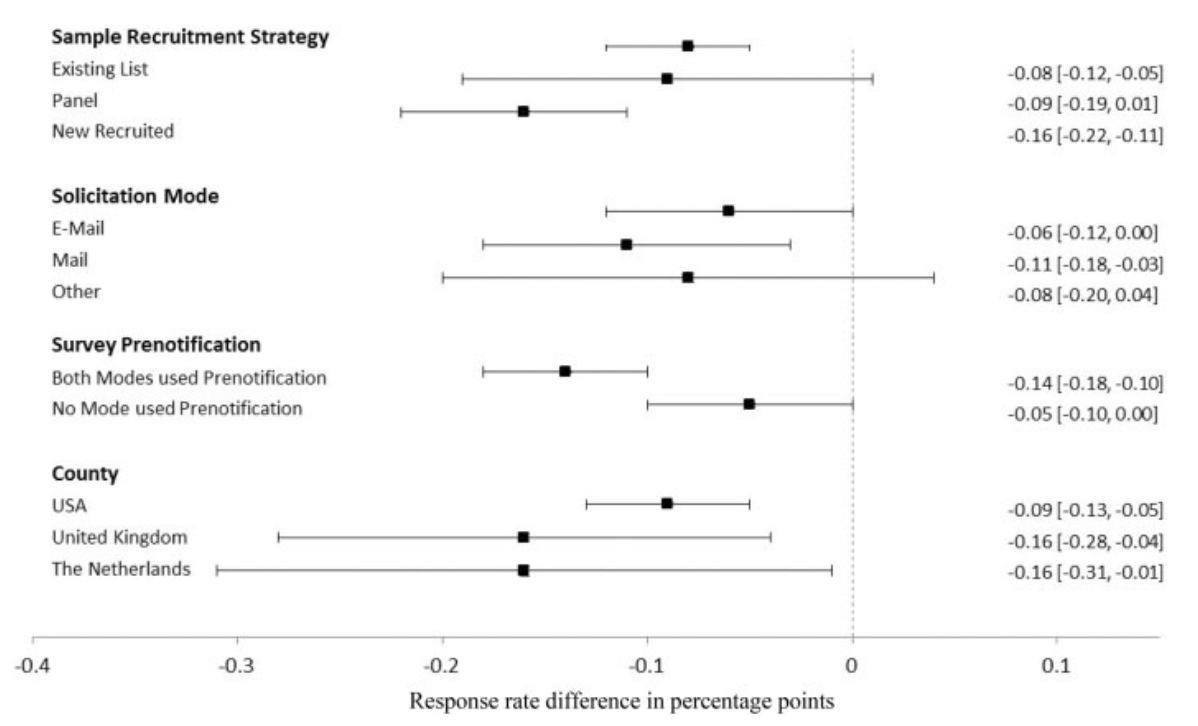
- among younger and digitally literate populations, the disadvantage of web surveys diminishes
jabkowski, cichocki (2025) - survey response rates in european comparative surveys
- declining trend in response rates (long term):
- clear and consistent long-term decline in survey response rates, especially in Western democracies
- response rates vary by mode of data collection:
- face-to-face > telephone > web and mail surveys
- Face-to-face:
- direct contact to researcher
- official clothing, researchers with official ID’s create trust
- it is possible to touch groups that are unreachable online or via phone
- (especially in web surveys) financial and non-financial incentives and follow-ups help, but their effects are limited
- distinguishing between refusal to participate and failure to contact is important
- methods to compete these are different
-
Conclusions
- authors recommend methodological pluralism: combining different data collection strategies, adapting to new technologies, and increasing transparency in reporting response metrics.
Lecture Notes:
- Difference between survey and marketing research:
- There is a legal difference between the two
- Marketing research collects “personalized data”, written permission is needed
- In survey research, data is not personalized
- There is a legal difference between the two
- Sampling:
- Random: We know that the selection probabilities of our target group, and try to make it equal to all parts of the target population
- SRS — Simple Random Sampling
- Clustered Sampling, etc.
- We are interested in target population, but because it is too costly, we select a sample, based on the answers that are from the sample group, we estimate the results for the target population
- Purpose of the Survey: We want to estimate the parameters of the target population
- Mean, median, standart deviation
-
Total Survey Error:
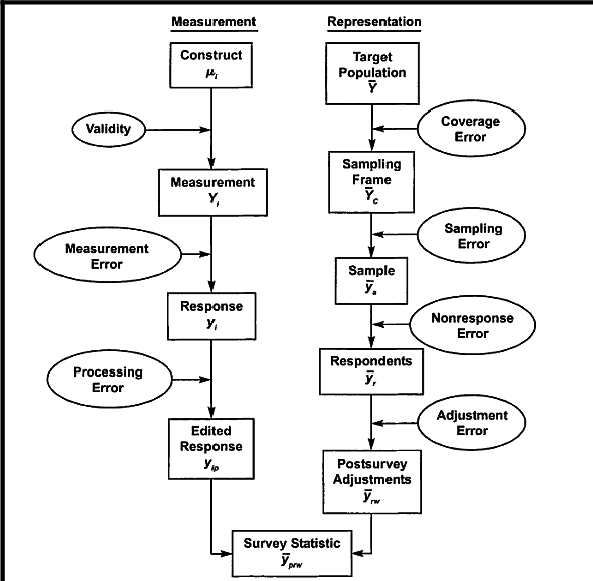 - Variance:
- Random error
- Precision of estimate
- Reliability
- Bias:
- Systematic Error
- Accuracy of Estimate
- Validity
- Variance:
- Random error
- Precision of estimate
- Reliability
- Bias:
- Systematic Error
- Accuracy of Estimate
- Validity
Non-response Error
- What the reasons of non-response error?
- Mode of the survey
- face-to-face, phone, web
- Mode of the survey
- Relevance of the survey to the target population
- making a survey about “language learning” among language learners gives more successful responses
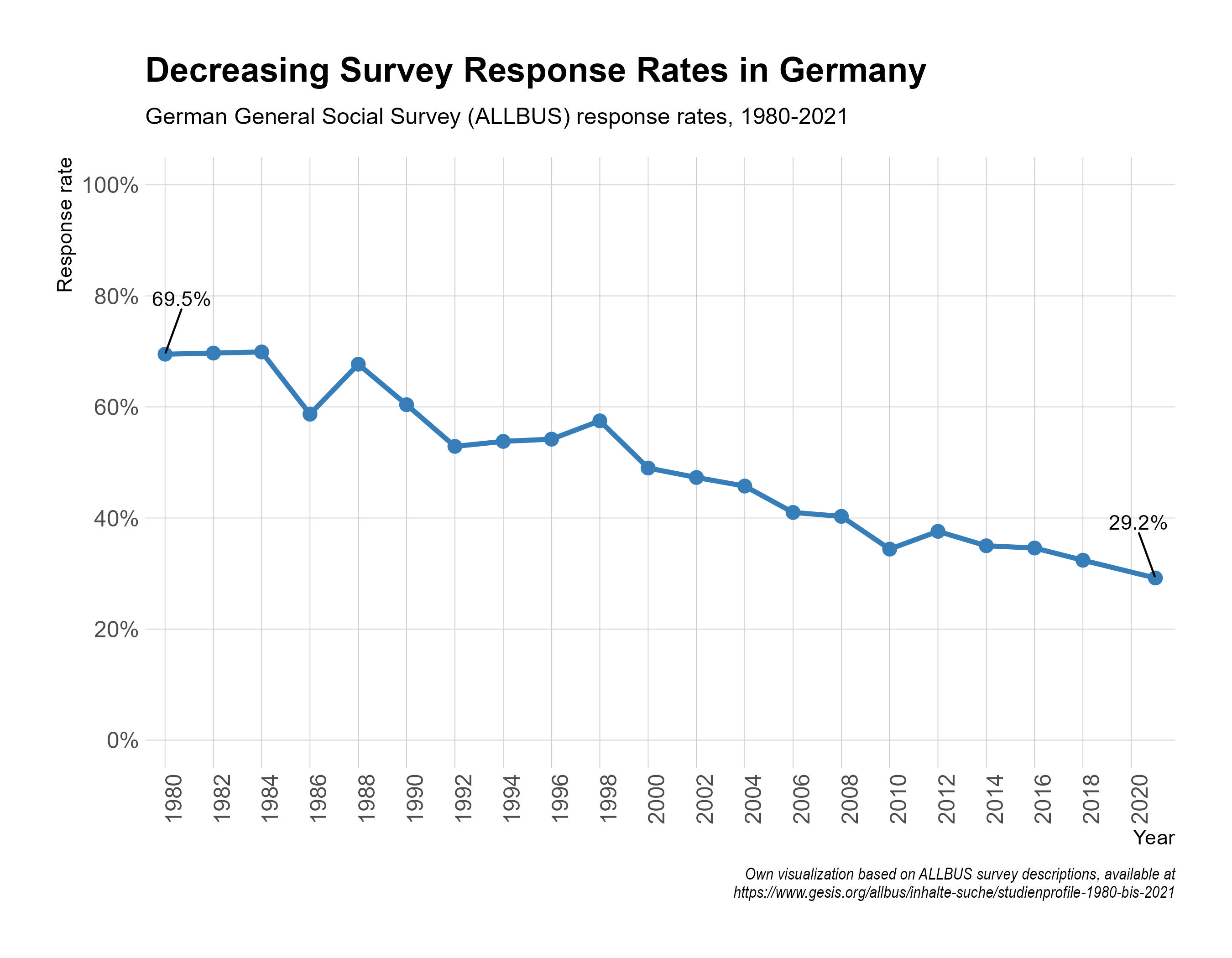
- making a survey about “language learning” among language learners gives more successful responses
- It’s not only in the country level we see the difference in non-response, but also the study level — some topics have more respondandts
- It is hard to measure whether non-response is a refusal or non-contact in terms of mail and e-mailing
- Why response non contact rates are getting higher?
- leisure activities and work times are higher than the past, it is harder to find people available to survey
- lower number of household members than ever
- less people are living together, modernity
- it is more difficult to reach the people who could answer the phone
- What about refusal?
- data protection sensitivity
- not interested in the topic, no connection to the topic
- they have less time, see it as a waste of time
- Various modes of survey:
- telephone interview
- face-to-face(CAPI)
- face-to-face(PAPI)
- web survey
- mobile web survey
- classroom survey
- mail survey (address based sampling) — getting popular recently and the response rates are pretty good
- Effect of different modes:
- Presence or the absence of the interviewer has a great effect on measurement error and non-response error
- Sensitive questions are a great example.
- Feeling anonymous
- Presence or the absence of the interviewer has a great effect on measurement error and non-response error